
PRACTICAL CHECKLIST / DENTAL SEO AUDIT
What a Dental SEO Audit Should Include
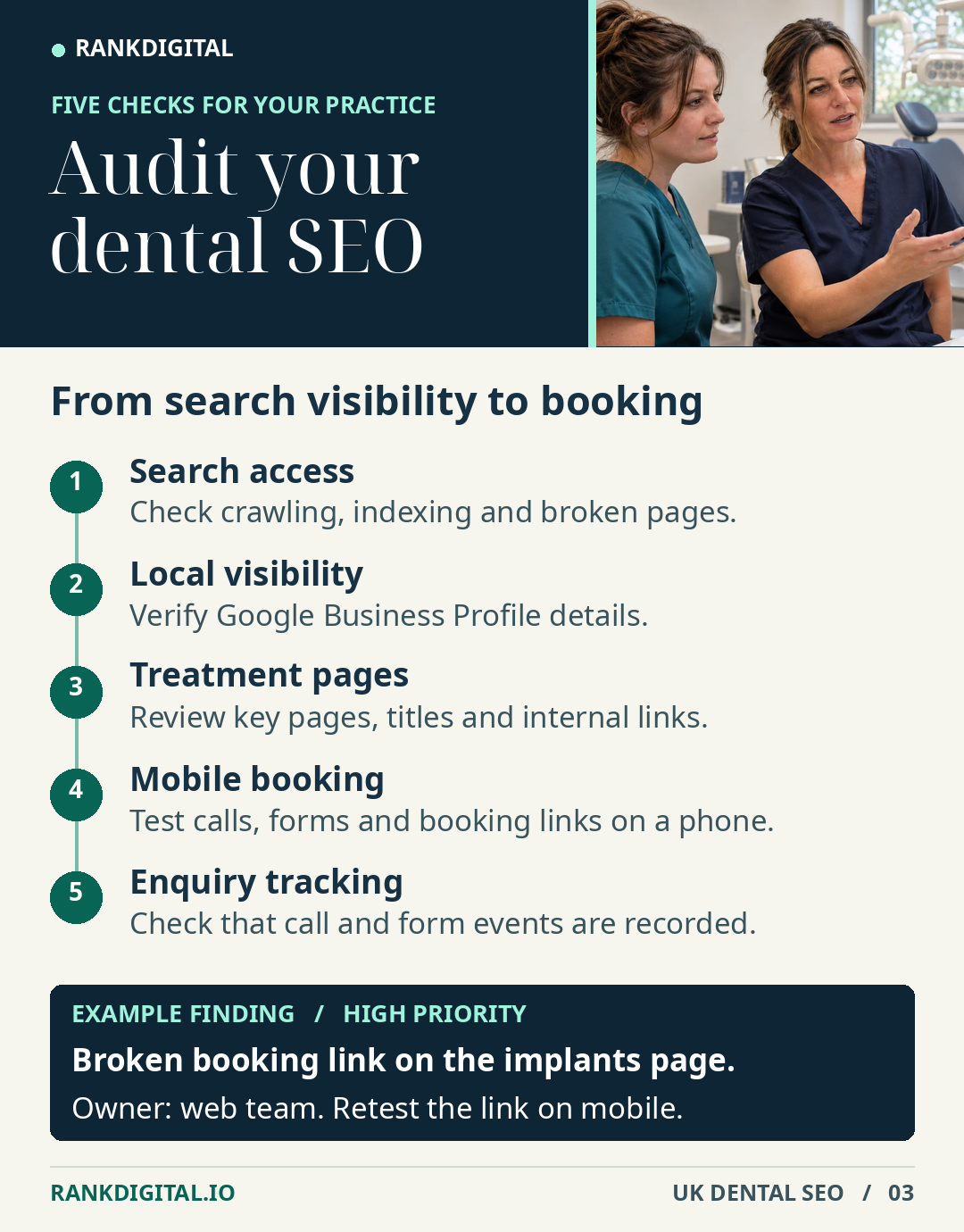
A dental SEO audit should show whether patients can find your practice, understand the treatment you offer and complete the next step. Review search access, local visibility, treatment pages, mobile booking and enquiry tracking. Turn each finding into a specific fix with an owner and a retest.

Check whether key pages can be found
Start with the homepage, location pages and the treatments you want to promote. Check that each returns a successful response, is accessible to Google and has the expected canonical URL. In Search Console, inspect a representative URL from each page type and compare its status with the site’s intended setup. Record any redirect, broken page or indexing discrepancy with the affected URL.
Review local visibility for each practice
Check the Google Business Profile for each location. Confirm the name, address, phone, hours and website destination match the practice’s own information. Follow the link through to the relevant page and make sure a patient can find directions and the correct contact route. Record the starting position and the checks you can repeat.
Review priority treatment pages
Pick two treatments the practice wants to grow. For each page, check whether the title, heading and opening copy explain the service and location. Check links from the homepage and relevant service pages. Ask the practice to review treatment claims, costs and availability before publishing edits.
Test the consultation route on a phone
Open the page on a phone, follow the consultation link and check the destination. Try the click-to-call control and walk through the form or booking steps using an agreed test route. Record what you can reproduce, where the user gets stuck and what confirmation they receive. Avoid using real patient details in a test.
Check whether enquiries are counted correctly
Review how calls and forms are recorded. If a form event fires on button press, check whether it also fires on failed submissions. Confirm that one successful test submission is counted once and can be matched with the expected enquiry record. Keep a baseline for the pages and events you plan to improve.
What a useful finding looks like
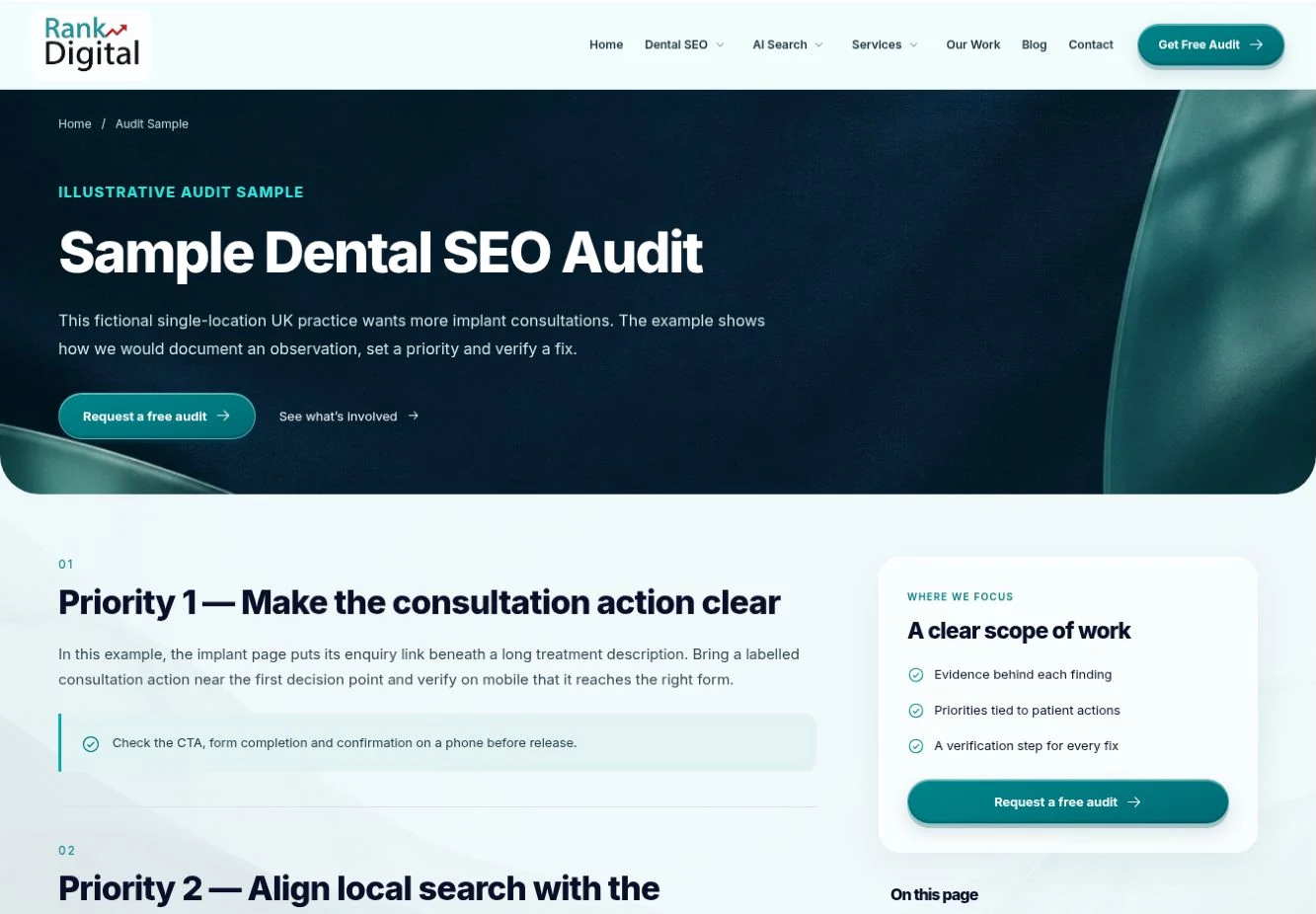
In RankDigital’s illustrative audit sample, the implant page places the consultation action beneath a long treatment description. A practical fix is to move a clearly labelled action closer to the first decision point. Assign the change to the web team, ask the practice to check the wording, and retest that the link reaches the intended form and returns the expected confirmation on mobile.
Write down the URL, observation, patient impact, priority, owner and retest. Keep an illustrative finding separate from any finding on your own site.
Turn the audit into a short implementation plan
Put blockers that prevent calls, enquiries or access to key pages first. Assign each fix to someone who can act on it and agree the evidence you expect after the change. Keep lower-priority improvements in a separate list so the team can finish and verify the first batch before expanding the work.
A FEW USEFUL ANSWERS
Frequently asked questions
How is an audit different from monthly SEO?
An audit identifies issues, evidence and priorities at a point in time. Monthly SEO may include implementation, monitoring and content work. Confirm who will fix each issue and whether retesting is included in the quoted scope.
Which pages should I audit first?
Start with your homepage, main location pages and the treatment pages you most want patients to find. Include the contact or booking page they reach next. This lets you test visibility and enquiry friction in the same review.
What should a dental SEO audit report include?
Each finding should include the affected URL, what was observed, why it matters, the suggested fix, an owner and how you will verify it. Useful reports distinguish confirmed issues from assumptions that need more evidence.
CONTINUE EXPLORING
Put the guidance into practice
Sample Dental SEO Audit
Read a worked example covering an implant page, local discovery, mobile booking and enquiry measurement.
Explore Dental growth
Dental SEO Audit UK
Get a structured review of your dental practice's search performance, technical health, content and conversion opportunities.
Explore RankDigitalFree Dental SEO Audit for UK Practices
Request a free initial dental SEO review covering treatment visibility, local search and the path to a patient enquiry.
Explore RankDigital
Dental SEO Cost in the UK: How to Compare Quotes
Compare UK dental SEO quotes using 90-day totals, setup fees, VAT, ad spend and scope. See two dated public examples and a worked cost comparison.
ExploreSTART WITH YOUR BIGGEST OPPORTUNITY
Let’s turn the next question into a clear plan.
Share your website, your priorities and what you want to improve.
Discuss your project